Engagement
Get involved by sharing your ideas, experiences, and curiosity! Science Comes to Town invites you to participate in different ways.
- Co-Creation
- Collaborating from the start in Co-Creation, where you actively shape projects and develop solutions together with researchers.
- Citizen Science
- Science Engaging in Citizen Science, where you explore, observe, experiment, and contribute your insights to real research.
- Science Battle
- Testing your creativity and teamwork in the Science Battle.
 Mutual Learning
- Exchanging expertise and best practices with professionals from partner cities in Mutual Learning workshops.
 Science Show
- Watching or taking part in live Science Show performances that bring research straight to the stage.
 Teacher Training
- Becoming a certified Science Show Trainer through our international Teacher Training programme.
 Children University
- Introducing young learners to science through Children University – coming soon.
Each format offers a unique way to connect science with everyday life and make a tangible difference in your community.
By participating, you don't just observe science: you become part of it. Your ideas, experiences, and local knowledge help develop practical solutions, generate meaningful insights, and create projects that are relevant, impactful, and scientifically grounded.
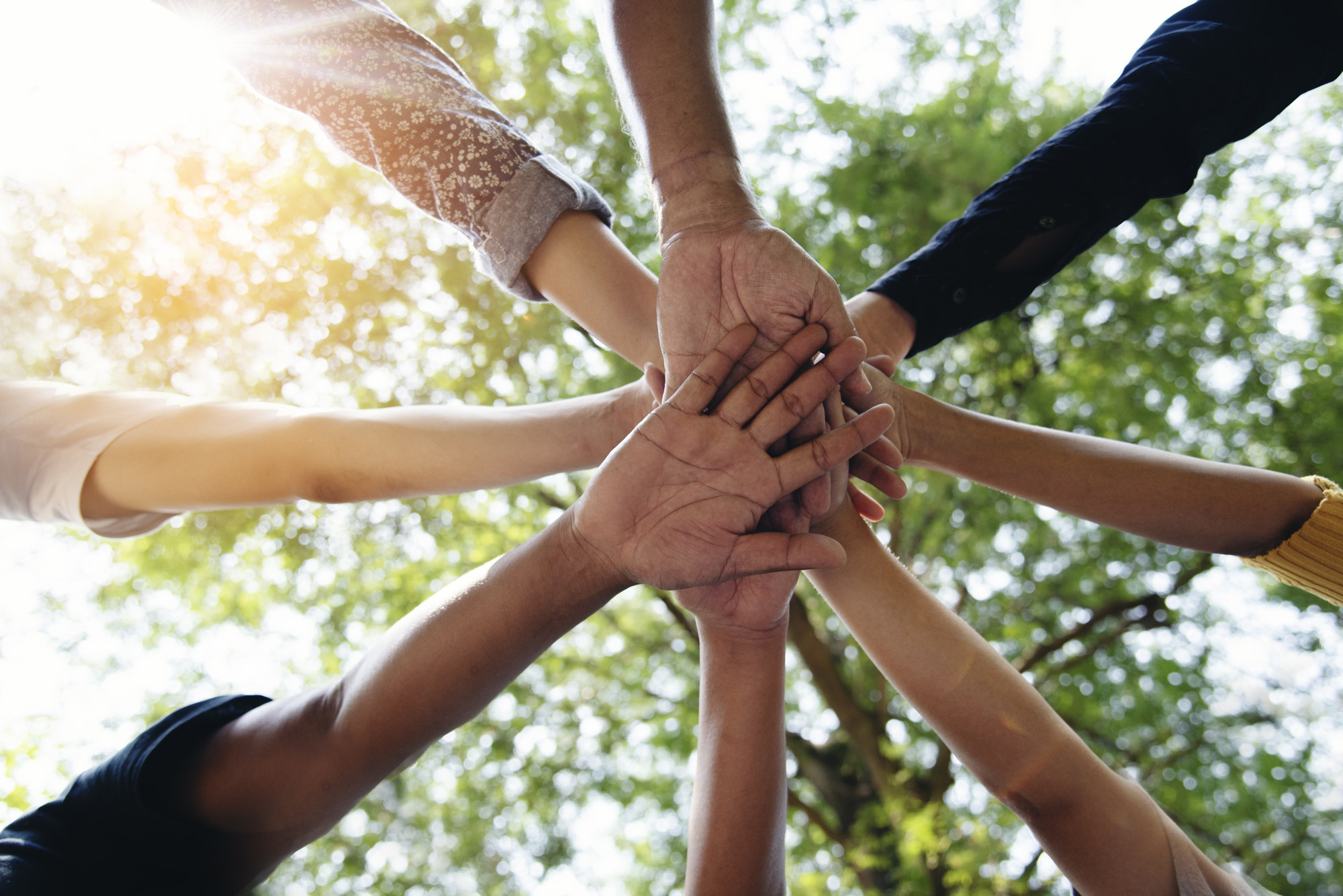
Engagement is open to everyone, regardless of age, background, or expertise. Whether you join alone, with friends, your family, school class, or club, your perspective matters. Together, we can make science more open, accessible, and relevant. Turning curiosity into action and ideas into change in neighborhoods, schools, clubs, and cities.
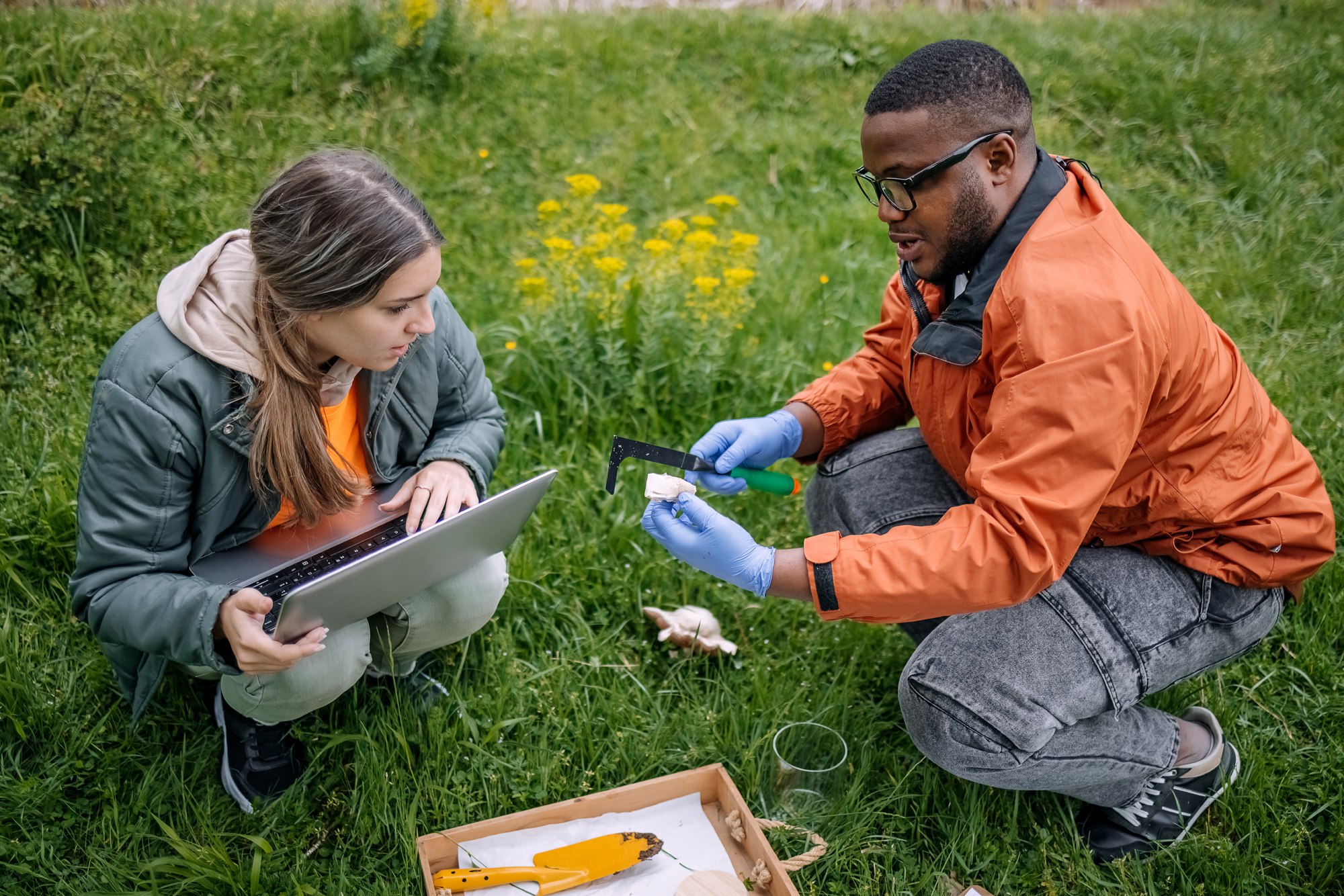
Visit the local Co-Creation websites to join the movement!
Co-Creation at Science Comes to Town
The Co-Creation Project is part of the EU initiative Science Comes to Town. In Kiel, Brest, and Split, citizens are invited to develop their own research projects on topics that matter to them in their daily lives. It's not about complicated lab experiments, but about practical projects that connect science with local everyday life.
Selected projects receive
Prize money
Up to €1,000 per project
Expert guidance
Scientists act as advisory partners
Public visibility
Through project communications
Our goal: make science tangible and relevant, turn citizens into researchers, and create knowledge that directly benefits cities.
What is mutual learning?
Mutual Learning, a Science Comes to Town initiative, is designed to bring together professionals and experts from across partner cities. These workshops create a collaborative environment where participants can exchange best practices, share experiences, and explore innovative approaches to topics of common interest.
Built around the principles of peer learning and co-creation, the workshops encourage participants to bring real challenges from their own institutions and cities. Through facilitated discussions, hands-on group work, and the sharing of practical expertise, participants work together to develop ideas, identify solutions, and gain new skills that can be applied and disseminated within their local contexts.
The programme also includes participant-led sessions offering opportunities for attendees to propose topics, showcase their own expertise, and explore emerging issues with their peers. Beyond the workshops themselves, the initiative aims to foster lasting connections and support the development of long-term communities of practice across Europe.
Four key themes for 2026
Together, these workshops strengthen collaboration, encourage innovation, and support the development of impactful science engagement activities.
Key principles
Peer exchange
Participants share their own experience and methods
Real challenges
Participants bring current science communication questions from their institutions
Hands-on work
Teams develop ideas and solutions together
Participant expertise
Short sessions contributed by participants themselves
The programme also allows space for participant-led sessions, similar to a light bar-camp format, where participants propose topics they would like to share or explore.
Train-the-trainer: taking the Science Show to the world
As part of the initiative “Science Comes to Town”, Kiel University (CAU) is offering an international Train-the-Trainer programme designed to extend the success story of the Science Show and provide fresh impetus for science communication. The aim is to prepare committed multipliers to bring the Science Show concept to their own cities and institutions – tailoring it to local contexts and target audiences.
Participants can look forward to a practical, modular training programme in 2026. Working within an international group, they will benefit from intensive professional exchange and a ‘wealth of experience’ that has been built up in Kiel over many years and further developed within the SEA-EU Alliance.
Certification
Upon successful completion of the programme, participants will be awarded an official certificate as a ‘Science Show Trainer’. This not only certifies the skills acquired but also makes participants active ambassadors for dynamic science communication.
The Train-the-Trainer programme represents a significant step toward the sustainable dissemination of the Science Show – and toward making science visible, understandable, and inspiring across Europe.
Research takes the stage
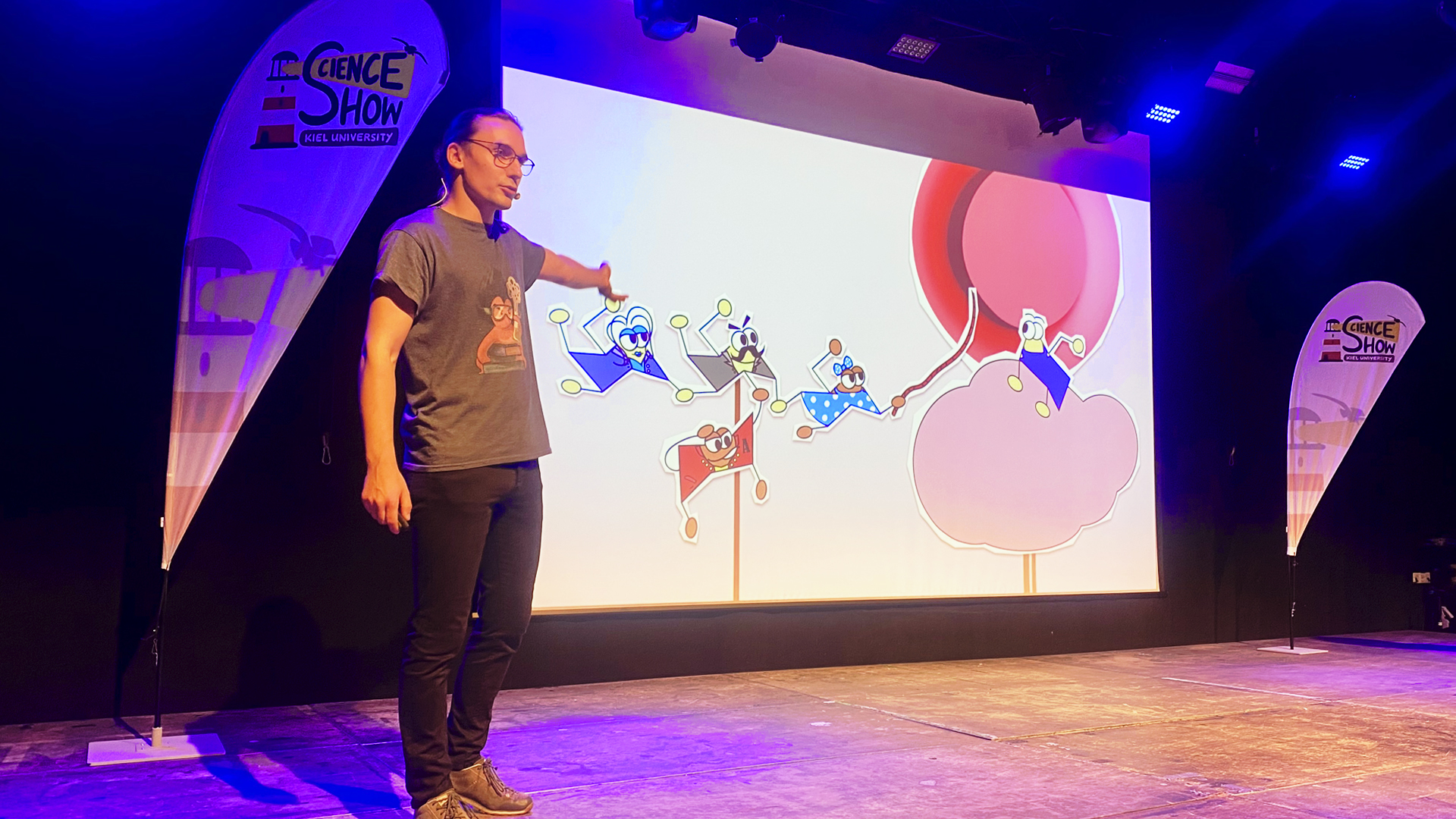
The Science Show at Kiel University brings current research to the stage – in a lively, accessible and engaging way. Young researchers share their work with a broad audience, bringing science to life outside the lecture hall.
Speakers also get the chance to build confidence and sharpen their own presentation style. They're coached by Ulf Evert and Katharine Simmons, who have spent years running practical presentation courses for students and doctoral candidates – preparing participants to communicate their research with clarity, enthusiasm and confidence on stage.
Science communication in action
More than an event – a platform for ideas, a training ground for talent, and a meeting place for science and the public.
Events in 2026
Women Science Show
5 March 2026 · Studio Filmtheater
Ocean Science Show
9 May 2026 · Segelcamp Kiel
Science Show at Kieler Woche
21 June 2026, 2:00 pm · Seeburg, Kiel
24 June 2026, 1:45 pm · Junge Bühne, Ratsdienergarten, Kiel
27 June 2026, 2:00 pm · Seeburg, Kiel (in English)
Science Comes to Town staff week
30 June – 2 July 2026 · Kiel
Science on the Beach
30 July 2026, 5:00 pm · Konzertmuschel, Laboe
Science Show @ EUCYS
23 September 2026 · CAU Kiel
Science Show @ Science Day
25 September 2026 · Pumpe
European Researchers' Night
25 September 2026 · Gdańsk
Science Show
31 October 2026 · Faro
Night of the profs
20 November 2026 · CAU Kiel
Science Show
20 November 2026 · Bodø
Science in Advent
December 2026 · Seeburg