In 2026, Science Comes to Town aims to connect researchers with the public in Brest, Kiel and Split and beyond.
By Timothy Spence
When three European cities launch an initiative next year to boost scientific excellence and collaboration, much of the action is likely to take place in public spaces rather than in the laboratory.
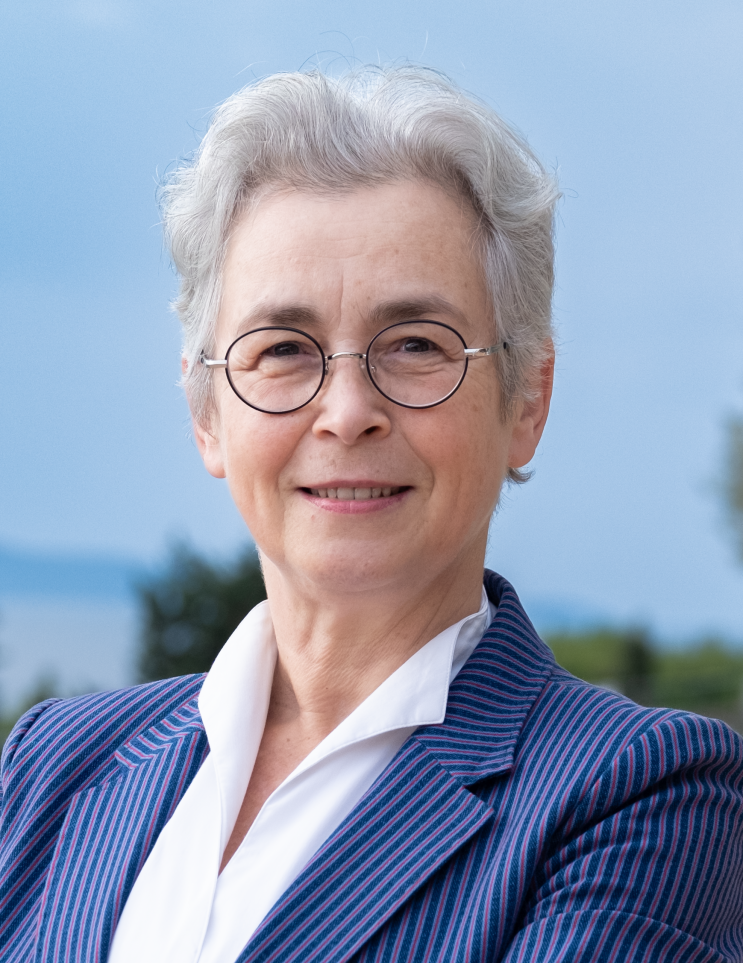
That is welcome news for Ana Marušić. A medical doctor and professor at the University of Split Medical School in Croatia, Marušić champions close connections between “town and gown” to encourage citizen involvement in research, raise public health awareness and ignite young people’s interest in science. “Responsible research and innovation cannot be done in an ivory tower, answering only the questions that are relevant for scientists,” explains Marušić, who chairs the Department of Research in Biomedicine and Health and leads the Centre for Evidence-based Medicine. “The role of the university is to be a medium for transferring new discoveries in science to society, but also to listen to society about what is important and what is needed.”
Three cities united by science
Marušić’s efforts stand to gain traction through Science Comes to Town (SCTT), a new European project to highlight science’s role in society and strengthen cross-border collaboration in research, innovation and sustainability. With funding from the European Commission, three cities—Split, Brest (in France) and Kiel (in Germany)—plan more than 1,000 public events, workshops and competitions for citizens of all ages, researchers, businesses and policymakers. The year-long project kicks off in Spilt on 20 January with a conference involving partner institutions, community representatives and European policymakers.
The three cities may be geographically far apart, but they share much in common. All are located on coasts and are home to top regional research institutions that are part of SCTT. Among the project's partners, the University of Western Brittany in Brest, Kiel University and the University of Split belong to the SEA-EU university alliance, uniting nine European coastal academic institutions to advance research, student exchanges and sustainable development. “These universities have a very strong connection between gown and town,” explains Marušić, who is one of Split’s SCTT ambassadors. “It's very important that these universities are there for the community so that we can learn from each other and grow together.”
Tackling Europe’s STEM shortages
SCTT will also reinforce efforts to address Europe’s widening gap in science, technology, engineering and mathematics (STEM) education. Studies show that nearly eight out of ten small- and medium-sized businesses cannot find enough workers with the skills required in advanced computing and artificial intelligence (AI)—hindering initiatives to boost European innovation and competitiveness. In healthcare, the European Commission has estimated a shortfall in medical professionals of 1.2 million, due to fewer young people joining the field and an ageing population that needs more care.
Strengthening knowledge and dialogue can also help build trust between scientists and the public at time when disruptive technologies are reshaping research and clinical practice, but are also sparking questions about ethics and accuracy. With experience in the classroom and in clinical epidemiology—a discipline involving monitoring and controlling public health problems—Marušić sees the potential risks of over-reliance on AI and chatbot answers for both research and learning. “AI is a very good tool, but one has to be very critical about it,” she adds. “Delegating brain activities will definitely diminish your neural capacities because you are not developing the circuitry that is important for higher-level cognitive engagement.” She stresses the importance of critical thinking and encourages students to use AI as a researcher’s tool to reinforce rather than supplant human discretion and brainpower.
The power of outreach
Split’s experience in bringing scientists and the public together has provided a platform for discussing research ethics and explaining science in simple terms. Local efforts to expand health literacy and awareness have helped reduce cardiovascular disease among women, according to Marušić’s research. The city’s university also hosts events to introduce schoolchildren to science, using hands-on experiments to spark curiosity.
Marušić’s own love of science began with an interest in studying molecular biology. “But my parents told me, why don't you study medicine?” she recalls. “I said, OK, why not? And that was the best decision that I made.” Marušić is not a practicing physician, but teaches anatomy and public health. She also co-edits ST-OPEN, an overlay university journal that works on capacity building for research publishing among students and their supervisors. Balancing teaching, research and editorial work, she is a strong advocate for medical studies, urging high school students to consider medicine “because later on it gives you a really wide perspective about human life and about society” as well as many career opportunities.
As SCTT prepares to bring science into daily life in 2026, Marušić hopes that it will build permanent bridges between scientists and citizens across Europe. “We can be a showcase for making collaboration with the community stronger to share knowledge, attract young talent and integrate critical and scientific thinking into everyday life,” she explains, adding that "collaborating with businesses to improve cities and communities is also an important aspect of this project."
Science|Business, which connects policymakers, academics and industry through its news reporting, analysis and events, is an SCTT partner.